
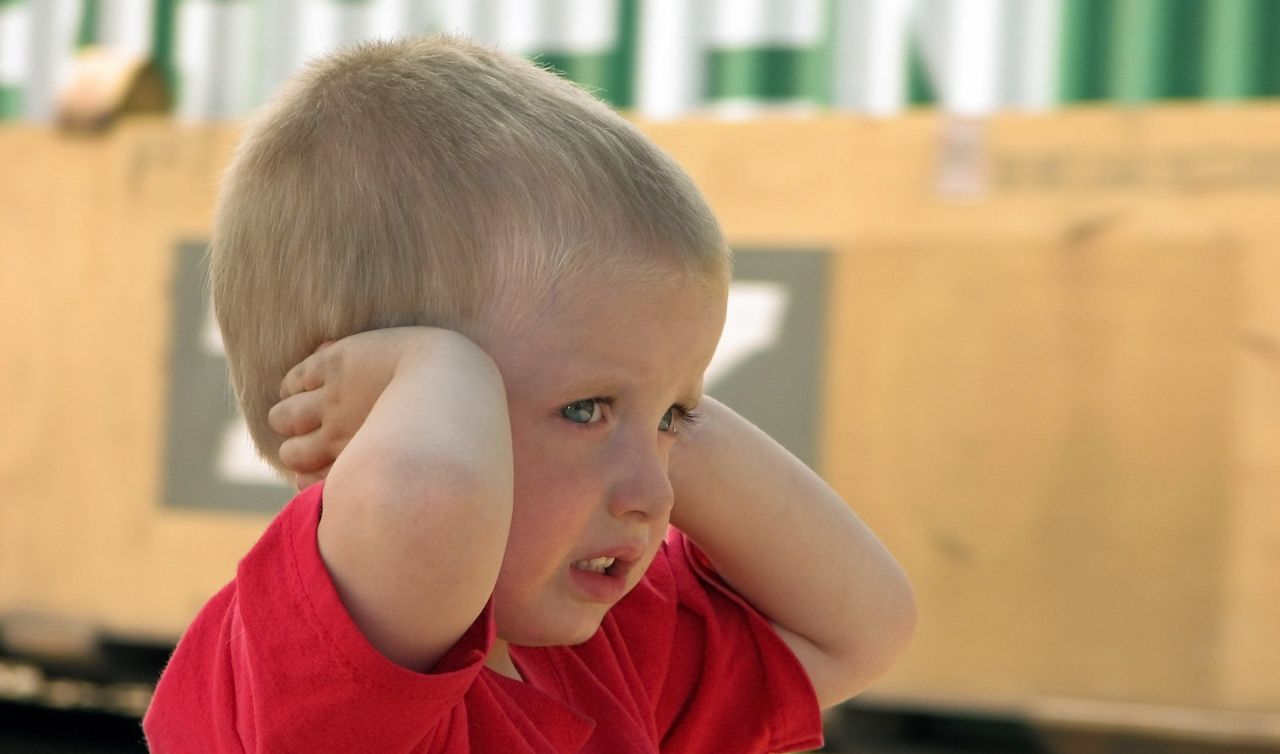
You enter a public restroom with your young child. You finish up, step toward the sink, and suddenly—WHOOSH. An automatic toilet flushes unexpectedly, or someone activates a roaring restroom hand dryer. In a split second, your child covers their ears, screams, or tries to bolt out the door in sheer panic.
At home, a similar drama unfolds every time you pull out the vacuum cleaner or turn on the blender.
As a parent or caregiver, this can feel incredibly baffling. You might find yourself wondering: Why do ordinary household and community sounds terrify my child, especially when they can happily listen to loud music, play noisy video games, or shout at the top of their lungs?
The secret behind this behavior lies in how your child’s brain filters sound—and it all comes down to predictability.
Auditory Filtering and the Element of Surprise
In a typically developing nervous system, the brain acts like a volume control dial and a security guard all at once. This function is called auditory filtering and modulation. It allows most of us to naturally tune out background hums (like a refrigerator or traffic) and focus only on what is important.
Furthermore, our brains are excellent at predicting outcomes. When a child beats a toy drum or turns up their favorite television show, their brain expects the noise. Because the sound is predictable, the nervous system remains calm.
However, for many young children, the brain’s built-in sound filter doesn’t organize environmental information appropriately. When an automatic toilet flushes or a vacuum roars to life, two distinct neurological barriers collapse:
- The Volume Control Fails: The noise hits their eardrums at maximum, piercing intensity—a state known as auditory defensiveness.
- The Surprise Factor Triggers Danger: Because the child cannot anticipate exactly when the loud hand dryer or automatic flush will erupt, the sound registers to their nervous system as an immediate physical threat.
Instead of just hearing a loud noise, their brain treats the sound like a literal emergency. This instantly triggers a fight-or-flight response, flooding their tiny body with adrenaline and forcing them to drop to the floor, cover their ears, or cry in an effort to protect themselves.
Other Signs of Sensory Processing Challenges
Auditory sensitivity rarely travels alone. If your child struggles to filter out sounds, they may be dealing with broader sensory processing issues, which happen when the brain has trouble organizing everyday sensory data.
You might notice other red flags in their daily routine, including:
- Public Bathroom Avoidance: Refusing to use public restrooms, holding their urine until they get home, or bargaining to avoid certain environments.
- Grooming Meltdowns: Extreme distress, fear, or a desire to flee during basic self-care tasks like nail trimming, hair washing, or getting a haircut.
- Wardrobe Battles: Showing extreme discomfort or throwing tantrums over clothing textures, bulky winter jackets, stiff boots, or scratchy tags.
- Overstimulation: Becoming completely overwhelmed, hyperactive, or “all over the place” in visually crowded, busy, or unpredictable settings.
Inside the OT Clinic: How Occupational Therapy Helps Retrain the Nervous System
If your child is constantly living in fear of the next loud sound, you don’t have to simply avoid public spaces forever. Pediatric Occupational Therapists (OTs) are movement and sensory experts. Instead of just masking the problem, an OT works directly with your child’s nervous system to change how their brain perceives and responds to sensory input.
When you bring your child to therapy for sound sensitivities, an OT uses several hands-on strategies to help them regulate:
- Graded Desensitization & Playful Exposure: OTs introduce tricky sounds in a safe, controlled clinic environment. By using toys that make predictable noises or recording real-world sounds (like a vacuum) and playing them at a very low, non-threatening volume, the OT helps your child slowly build a tolerance to unexpected sounds at their own pace.
- Heavy Work and Vestibular Input: Before facing challenging sounds, OTs engage children in “heavy work” exercises—like crashing into mats, pushing heavy items, or swinging. This intense muscle and joint activation naturally releases calming chemicals in the brain, priming the nervous system to handle sensory stressors without instantly flipping into fight-or-flight.
- Empowering Through Predictability & Control: In therapy, the child is given the “power switch.” Letting a child control when a toy makes noise or when a buzzer sounds helps bridge the gap between unexpected and expected noise, helping their brain register that they are safe.
- Customized Environmental Toolkits: OTs partner with caregivers to build real-world toolkits. This includes teaching you how to use visual schedules to prepare your child for public restrooms, practicing public bathroom coping strategies in clinic simulations, and finding the right balance of sound-dampening headphones without over-relying on them.
Help Your Child Navigate a Noisy World
Watching your child experience genuine fear from everyday sounds can be heartbreaking, but you don’t have to navigate it alone. Our goal is to give your child the comfort, confidence, and tools they need to step into any environment without fear.
If your child is constantly covering their ears or struggling to handle the world’s ambient noises, our compassionate clinic team is here to help. Explore our Comprehensive Occupational Therapy Services to see how we systematically support sensory development. Reach out to Red Door Pediatric Therapy today to schedule a comprehensive sensory evaluation, and let’s help your child feel safe in their environment again!