
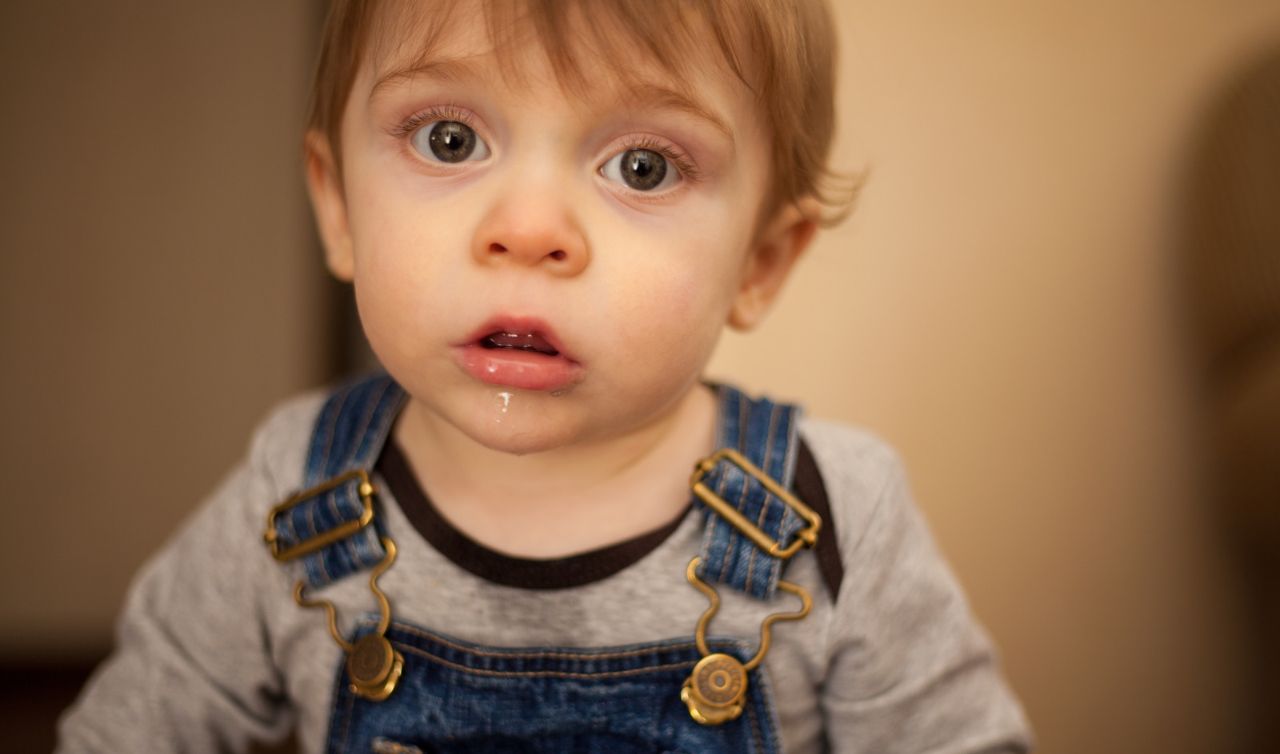
You’re sitting on the living room floor watching your kiddo tackle a challenging 24-piece puzzle. They are completely locked in, absolute focus written across their face. Then you notice it: a single, steady string of drool dangling from their lower lip, or a damp spot rapidly expanding on the front of their shirt.
By age four, most children have outgrown the drooling phase typical of teething infants and toddlers. So when it continues—especially during quiet activities like completing a puzzle, drawing, or watching TV—parents often wonder if it’s just a funny quirk or something that requires a closer look.
At Red Door Pediatric Therapy, this is a question our pediatric speech-language pathologists (SLPs) and occupational therapists (OTs) hear all the time. The short answer? Drooling during focused tasks isn’t usually a problem with producing too much saliva; it’s a motor planning and sensory awareness challenge.
Here is a breakdown of what is actually happening behind that focused drip, and why it happens when your child is concentrating hardest.
The Focus Connection: Why Concentration Triggers Drooling
When a child concentrates deeply on a cognitive or visual task—like fitting a puzzle piece into place or following a storyline on TV—their brain prioritizes visual processing and problem-solving.
Swallowing saliva is a complex automatic reflex that requires active brain power. When a child’s brain is working overtime to solve a problem or absorb visual information, automatic motor controls often take a back seat. If a child already has subtle challenges in their oral-motor system, those automatic swallows slow down or stop entirely, leading to pooled saliva that eventually spills over.
3 Core Reasons Your Child Might Be Drooling
When we evaluate persistent drooling (sialorrhea) at Red Door, we typically look at three underlying functional causes:
1. Poor Oral-Motor Tone (Low Muscular Strength and Endurance)
Swallowing requires coordination between the lips, tongue, jaw, and cheeks. To keep saliva inside the mouth, a child needs enough muscle tone to hold their lips together comfortably at rest (lip seal) and maintain a stable jaw position.
- What it looks like: Your child may naturally rest with their mouth slightly open (“mouth breathing”), or their lips might relax completely when they aren’t actively speaking or eating.
- Why focus affects it: Maintaining lip closure takes physical effort for a child with low oral tone. The moment their brain shifts focus to a puzzle, those lip muscles relax, the mouth opens, and gravity takes over.
2. Decreased Intraoral Sensory Awareness
To swallow saliva before it overflows, your brain has to receive a sensory signal telling it, “Hey, there’s liquid pooling in the mouth.” Some children have reduced sensory registration inside their mouth (intraoral awareness).
- What it looks like: They may not feel the saliva pooling on their tongue or resting on their chin until it actually drops onto their shirt or hands. You might also notice they prefer foods with strong flavors or crunchy textures because subtle sensory input is hard for them to register.
- Why focus affects it: When sensory processing is already reduced, high cognitive concentration further dims the child’s internal body awareness (proprioception and tactile sensation), making them completely oblivious to the overflow.
3. Structural Alignment and Airway Issues
Sometimes, the physical alignment of the mouth or a blocked upper airway makes lip closure and nasal breathing difficult.
- Open-Bite Positioning: If the top and bottom teeth do not meet properly when the mouth is closed—often due to prolonged thumb sucking, pacifier use, or natural jaw alignment—it creates an open gap through which saliva easily slips.
- Restricted Airway: Enlarged tonsils, adenoids, or seasonal allergies can make breathing through the nose difficult. Children naturally adapt by breathing through their mouth. A mouth that stays open to breathe cannot easily trap saliva.
When Should You Seek Professional Guidance?
Occasional drooling during intense focus isn’t an immediate cause for alarm, but persistent drooling at age four can affect a child’s skin integrity (causing chin rashes), self-esteem, and social interactions with peers.
It may be time to consult with a pediatric therapist if you notice:
- Drooling occurs consistently throughout the day, not just during high-focus tasks.
- Your child routinely sleeps with their mouth wide open or snores.
- They have difficulty chewing age-appropriate foods or are an excessively messy eater.
- Speech clarity is hard for non-family members to understand.
- Your child seems unaware of food or liquid left on their face.
How Red Door Pediatric Therapy Can Help
At Red Door Pediatric Therapy, our team uses a holistic, child-centered approach to help children develop the foundation they need for comfortable lip closure and efficient swallowing.
Through targeted Speech Therapy and Occupational Therapy, we can help:
- Build Muscle Strength: Fun, play-based exercises (like blowing bubbles, using specialized straws, or playing oral movement games) strengthen the lips, tongue, and jaw.
- Increase Sensory Registration: We introduce tailored sensory strategies to improve your child’s awareness of saliva pooling, helping their brain recognize when it’s time to swallow automatically.
- Improve Posture and Core Stability: Oral-motor control starts with trunk stability. OTs work on overall physical posture so the neck and head are properly aligned for swallowing.
- Interdisciplinary Collaboration: If structural alignment or airway issues (like enlarged adenoids) are present, we partner with your pediatrician or an ENT specialist to ensure your child receives complete care.
Ready to Learn More?
If you’re tired of replacing wet shirts or wondering if your child’s drooling is something they will outgrow, we are here to support you. Contact Red Door Pediatric Therapy today to schedule an evaluation with one of our pediatric specialists!