



Behind the Drip: Why Your Child Drools During Deep Focus
You’re sitting on the living room floor watching your kiddo tackle a challenging 24-piece puzzle. They are completely locked in, absolute focus written across their face. Then you notice it: a single, steady string of drool dangling from their lower lip, or a damp spot rapidly expanding on the front of their shirt. By age four, most children have outgrown the drooling phase typical of teething infants and toddlers. So when it continues—especially during quiet activities like completing a puzzle, drawing, or watching TV—parents often wonder if it’s just a

Sound Alarm: Why Everyday Noises Send Your Child Into Fight-or-Flight
You enter a public restroom with your young child. You finish up, step toward the sink, and suddenly—WHOOSH. An automatic toilet flushes unexpectedly, or someone activates a roaring restroom hand dryer. In a split second, your child covers their ears, screams, or tries to bolt out the door in sheer panic. At home, a similar drama unfolds every time you pull out the vacuum cleaner or turn on the blender. As a parent or caregiver, this can feel incredibly baffling. You might find yourself wondering: Why do ordinary household and
Exhausted at School, Snoring at Night: Could an OMD Be the Missing Link?
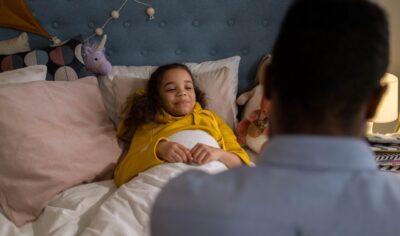
You tuck your school-aged child into bed, and within minutes, you hear it: a heavy pattern of snoring, accompanied by the harsh, alarming sound of teeth grinding. Fast forward to the next afternoon. Your child drags themselves off the school bus, completely exhausted, irritable, and struggling to focus on their homework. As a caregiver, it is incredibly frustrating to see your child sleep for nine or ten hours, only to remain completely wiped out during the day. It leaves you wondering: Could the snoring and grinding be directly related to their

Seam-Free and Stress-Free: Navigating Seasonal Clothing Transitions with Sensory-Sensitive Kids
Seasonal clothing transitions—like swapping bare feet for socks or short sleeves for heavy winter coats—can feel like a sensory assault for a child with an over-responsive nervous system. When the weather shifts, parents often face intense morning standoffs. What looks like stubborn defiance is often a child’s survival response to tactile discomfort. As pediatric Occupational, Physical, and Speech therapists, we look at clothing struggles through a neurological lens. A change in wardrobe requires a child to process completely new tactile inputs while simultaneously disrupting a familiar tactile routine. Here is why

Master the Morning: 3 Therapist-Approved Strategies for Kids Who Hate AM Transitions
Creating a successful morning routine with kids who struggle to wake up, resist transitions, or show defiance starts with co-regulation and sensory-behavioral strategies. When mornings feel like a battleground, it is usually because a child’s nervous system is overwhelmed by the rapid shift from sleep to demands. As pediatric Speech-Language Pathologists (SLPs), Occupational Therapists (OTs), and Physical Therapists (PTs), we view morning battles through a developmental lens. Defiance is often a communication of distress or an inability to process sensory inputs. Here are three collaborative, multidisciplinary strategies you can implement tomorrow

Beyond Words: Why “Presuming Competence” Changes Everything for Non-Speaking Kids
When a child is non-speaking or non-verbal, it is easy for the world to mistakenly equate an inability to speak with an inability to think. At Red Door Pediatric Therapy, we reject this outdated assumption, leading instead with one of the most vital, neurodiversity-affirming concepts in modern therapy: presuming competence. Presuming competence means starting from the absolute belief that a child understands what is happening around them, possesses a rich inner life, and is fully capable of learning and connecting. When we assume a child is smart, aware, and listening,