
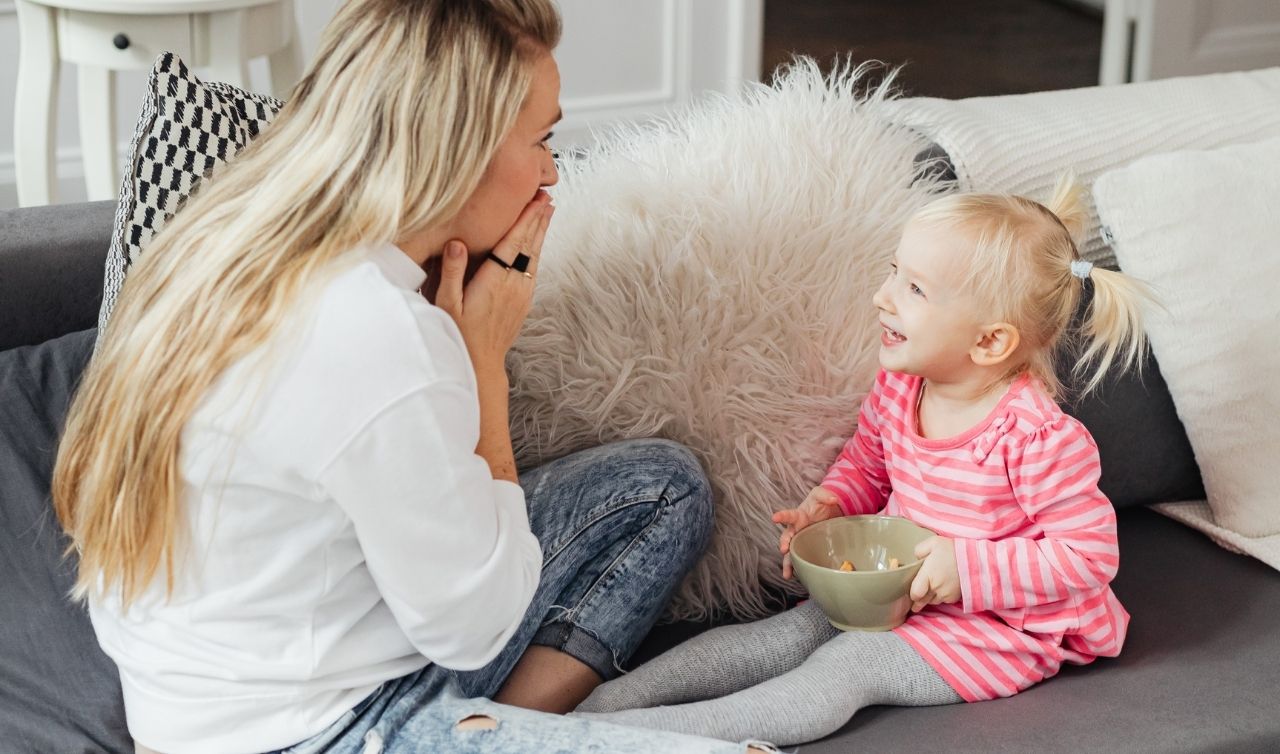
Modeling — when an adult shows a child how to use words, sentences, gestures, and sounds — is one of the most powerful ways kids learn language. It gives a clear, repeatable example of how language works in real situations, helps build vocabulary, teaches grammar naturally, and supports communication even before words come. Adding sensory immersion (touch, movement, sight, smell, and sound) makes modeling stickier: multisensory moments are more engaging, more memorable, and easier for children to connect with meaning.
How modeling helps
- Builds meaningful context: children learn words tied to actions, objects, and feelings.
- Teaches patterns: hearing models shows grammar, turn-taking, and intonation.
- Supports social skills: modeling includes eye contact, gestures, and back-and-forth interaction.
- Reduces pressure: children can copy without being forced to perform.
- Reinforces learning through multiple senses: pairing words with touch, movement, or sound strengthens connections in the brain.
Simple modeling tips for caregivers
- Use short, clear phrases (e.g., “More juice,” “Big ball,” “Up, please”), repeated naturally.
- Model one step beyond the child’s current level (if they say “ball,” model “big ball” or “roll the ball”).
- Wait and give children time to respond; model again if they don’t.
- Pair words with gestures, facial expressions, or objects — show what you mean.
- Follow the child’s interests so models are motivating and relevant.
4 at-home activities that combine modeling with sensory immersion
- Bath-time talk-and-feel
- What to do: Name bath items and actions as you play: “Sponge—soft,” “Pour—splash,” “Bubble—pop.” Gently rub water on your child’s hands or feet while saying words like “warm” or “wet.”
- Why it works: Water, bubbles, and textures provide tactile and auditory cues that make words meaningful.
- Snack-time shopping and sensory sorting
- What to do: Line up snacks with different textures and tastes (crackers, banana, yogurt). Model phrases: “Crunchy cracker,” “Sweet banana,” “Scoop yogurt.” Let your child touch and describe textures.
- Why it works: Taste and texture boost vocabulary for descriptors and helps with requesting and commenting.
- Outside walk with sound-hunt
- What to do: Walk and model labels for sensory experiences: “Leaves—crunch,” “Wind—whoosh,” “Bird—tweet.” Pause to point, listen, and imitate sounds together.
- Why it works: Natural environmental sounds link words to real-world cues and encourage imitation.
- Dress-up and movement play
- What to do: While dressing or playing with costumes, model action words and simple sentences: “Put on hat,” “Jump high,” “Twirl slow.” Let your child touch fabrics and move while you narrate.
- Why it works: Movement plus tactile input strengthens verbs and descriptive language and supports motor-verbal links.
(If you want 1–2 more activity ideas for infants or for older preschoolers, I can add them.)
Quick reminders for success
- Keep it natural and fun — the best learning happens during enjoyable back-and-forth moments.
- Repeat models across routines (mealtimes, bath, car rides) for consistency.
- Celebrate attempts, not perfection — imitation often precedes spontaneous use.
- If you’re concerned about speech or language development, ask a professional for an assessment.