
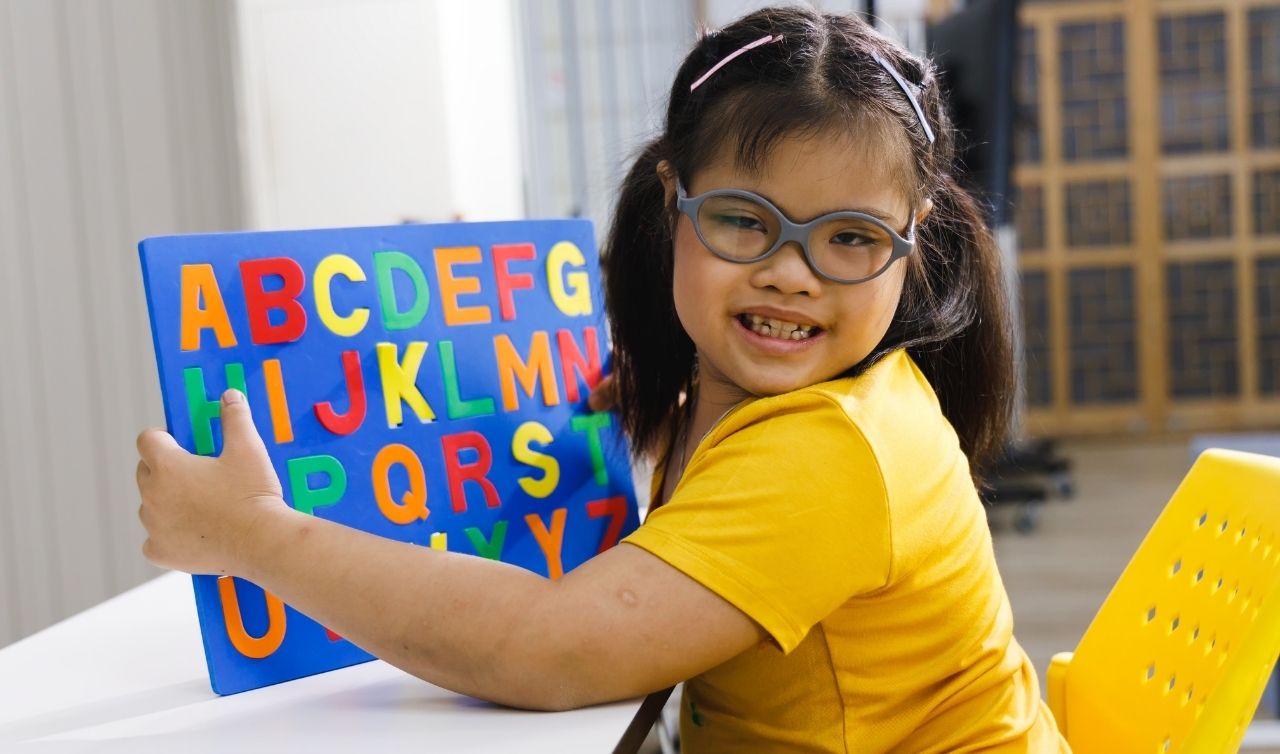
Down syndrome is a genetic condition caused by the presence of an extra full or partial copy of chromosome 21 (most commonly trisomy 21). According to the Centers for Disease Control and Prevention (CDC), it is the most common chromosomal condition in the United States, occurring in about 1 in every 640 to 700 live births, with around 5,700 to 5,775 babies born with Down syndrome each year.
Children with Down syndrome often experience a range of developmental challenges, including intellectual disability (typically mild to moderate), physical health issues (such as congenital heart defects or hearing loss), and delays in motor, cognitive, and communication skills. Speech and language delays are very common and often more pronounced than in many other areas of development. Expressive language (speaking) tends to lag behind receptive language (understanding), and challenges with articulation, phonology, syntax, and speech intelligibility persist for many into adulthood.
The Relationship Between Down Syndrome and Speech Disorders
Children with Down syndrome frequently have difficulties with speech production due to factors like low muscle tone (hypotonia) in the oral and facial muscles, differences in oral anatomy (such as a smaller oral cavity relative to tongue size, high-arched palate), hearing issues, and cognitive delays. Common characteristics include reduced speech intelligibility (speech that is hard to understand), omissions or distortions of sounds, slower development of clear articulation, and challenges with grammatical structure (often resulting in shorter, telegraphic sentences). While frontal lisps and orofacial myofunctional disorders (OMDs)—such as inappropriate tongue resting posture, tongue thrust swallowing patterns, or poor oral habits—can occur and impact speech clarity, they are not universal or the most emphasized features across major sources. These issues can contribute to difficulties in social interactions, academic participation, and overall communication.
Early Feeding Difficulties
Feeding challenges often appear early in infancy for children with Down syndrome and can signal potential later speech and language concerns. Hypotonia affects oral-motor coordination needed for effective sucking, swallowing, chewing, and transitioning to solids. Infants may struggle with latching, weak suck, poor lip closure, tongue protrusion, choking, or aspiration risks. These early oral-motor weaknesses can influence the foundation for speech production, as the same muscles and coordination are involved.
Addressing feeding difficulties promptly through early intervention—such as support from occupational therapists, speech-language pathologists, or lactation consultants—can strengthen oral-motor skills, improve safety during meals, and support developmental progress.
The Role of Speech-Language Pathologists (SLPs)
SLPs are essential in supporting communication development for children with Down syndrome. They provide specialized assessment and therapy to address speech sound production, language skills, feeding/swallowing, and augmentative/alternative communication (such as signs, gestures, or pictures) when needed.
SLPs draw on knowledge in areas like:
- Anatomy and physiology of speech and feeding structures.
- Typical and atypical speech sound and language development.
- Oral-motor techniques to address hypotonia and coordination.
- Feeding and swallowing strategies.
- Individualized plans that build on a child’s strengths (e.g., strong receptive skills or social motivation) and incorporate total communication approaches.
Benefits of Early Intervention
Early intervention services—including speech-language therapy, physical therapy, and occupational therapy—are highly recommended starting in infancy. Research and expert guidelines (from organizations like NDSS) emphasize that prompt, targeted support for pre-speech skills (e.g., imitating sounds, turn-taking, oral exploration), feeding, and communication can lead to meaningful gains.
Key benefits include:
- Improved speech intelligibility and articulation through early oral-motor work.
- Stronger overall language development, supporting cognitive and academic progress.
- Enhanced social engagement, confidence, and emotional well-being as children communicate more effectively with peers and family.
- Reduced frustration and potential behavioral challenges linked to communication barriers.
A “total communication” approach—combining speech, signs, gestures, and visuals—often accelerates progress without delaying spoken language.
Conclusion
For parents and caregivers of children with Down syndrome, recognizing potential speech, language, and feeding challenges early and accessing specialized support from speech-language pathologists and early intervention programs is essential. These efforts promote better communication, which in turn supports social, emotional, and cognitive growth, helping children lead more engaged and fulfilling lives.
If you have concerns about your child’s speech, language, or feeding skills, consult your pediatrician or reach out to a qualified pediatric therapy provider for evaluation and personalized guidance.
Syndrome: Building Strong Foundations from the Start