
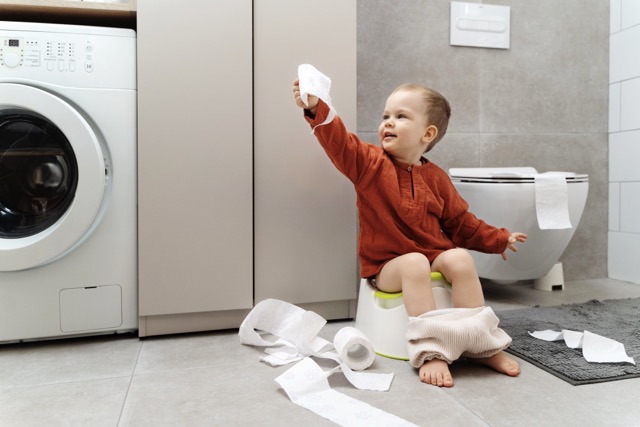
At Red Door Pediatric Therapy, we know that potty training can be both challenging and incredibly rewarding. When constipation has been part of your child’s journey, the process can feel even more overwhelming for both you and your child. It’s very common for children to master bladder control before they achieve full bowel continence. Building new habits takes patience, consistency, and compassion — and remember, every small step forward is a meaningful success.
Here are five therapist-approved tips to make bowel training more comfortable, functional, and successful — especially when constipation has been an issue.
1. Create a Calm and Predictable Routine
Little bodies thrive on routine, especially when they’re learning something new. Encourage your child to sit on the toilet after meals or when you notice he/she typically has a bowel movement (i.e. mid morning, post bathtime, etc.).
- Keep toilet sits short (3–5 minutes)
- Use a small footstool or toilet training potty so your child’s knees are higher than his/her hips.
- Avoid using electronics — spend time focused on relaxation and deep breathing strategies discussed below
- Praise effort over results — even “practice sits” build success!
💡 Try this: Make a fun “toilet time” playlist or storybook to keep your child relaxed while sitting.
2. Focus on Relaxation — Not Pushing
When bowel movements have been painful, children often hold their stools out of fear. We want to rebuild trust in their body. Using different strategies for breathing and relaxation while your child sits on the toilet will help him/ her be successful.
- Teach belly breathing: Have your child rest a small stuffed animal on his/her tummy and “rock it to sleep” by lifting and lowering the stuffed animal with deep breaths
- Blow bubbles, use pinwheels, or sing songs to help the body naturally relax
- Skip cues like “push hard.” Relaxation is the key to success!
🌈 Therapist insight: Full bowel emptying happens best when our pelvic floor is relaxed!
3. Support the Whole Body, Not Just the Bowel
Constipation management is about creating balance both inside and out.
- Encourage hydration and a diet rich in fruits, vegetables, and whole grains.
- Keep your child moving — playtime, squats, and jumping help keep the digestive system active.
- If recommended, talk with your child’s provider about stool softeners to keep bowel movements comfortable and pain-free.
🥕 Remember: Soft, easy stools help rebuild your child’s confidence and make progress much faster!
4. Keep It Positive and Shame-Free
Every child’s body has its own rhythm and that’s okay. For kids with pelvic floor or sensory challenges, the process can take more time — but pressure or punishment only increase stress.
- Use gentle, reassuring language: “Your body is learning. We’ll keep practicing together.”
- Accidents are part of learning — not a setback.
- Celebrate small successes: a calm sit, a try, or even talking about needing to go.
💛 Parent reminder: Your calm energy helps your child feel safe enough to succeed.
5. Stay Consistent — Even When It’s Hard
Success takes patience, but consistency builds confidence.
- Keep up the daily “potty sits” even if progress feels slow.
- Keep your tone light and loving.
- Reach out for extra support if things seem stuck — pediatric occupational or pelvic floor therapy can help with underlying challenges in sensory processing and pelvic floor functioning
🌿 Encouragement from our team: You’re not alone in this. We’ve helped many families through this stage — and progress always happens with steady, compassionate support.
You’ve Got This.
At Red Door Pediatric Therapy, we focus on ability — using each child’s interests and strengths to pave the way for success. Bowel training isn’t just a milestone; it’s a skill that can grow with patience, teamwork, and understanding.
If your child is experiencing constipation, stool withholding, or pelvic floor challenges, our therapy team can help you create a plan that works for your family. Together, we’ll make progress — one sit (and one smile) at a time.